Pedestal 「木作」
600*600*360cm,2023, six artists, playwoods
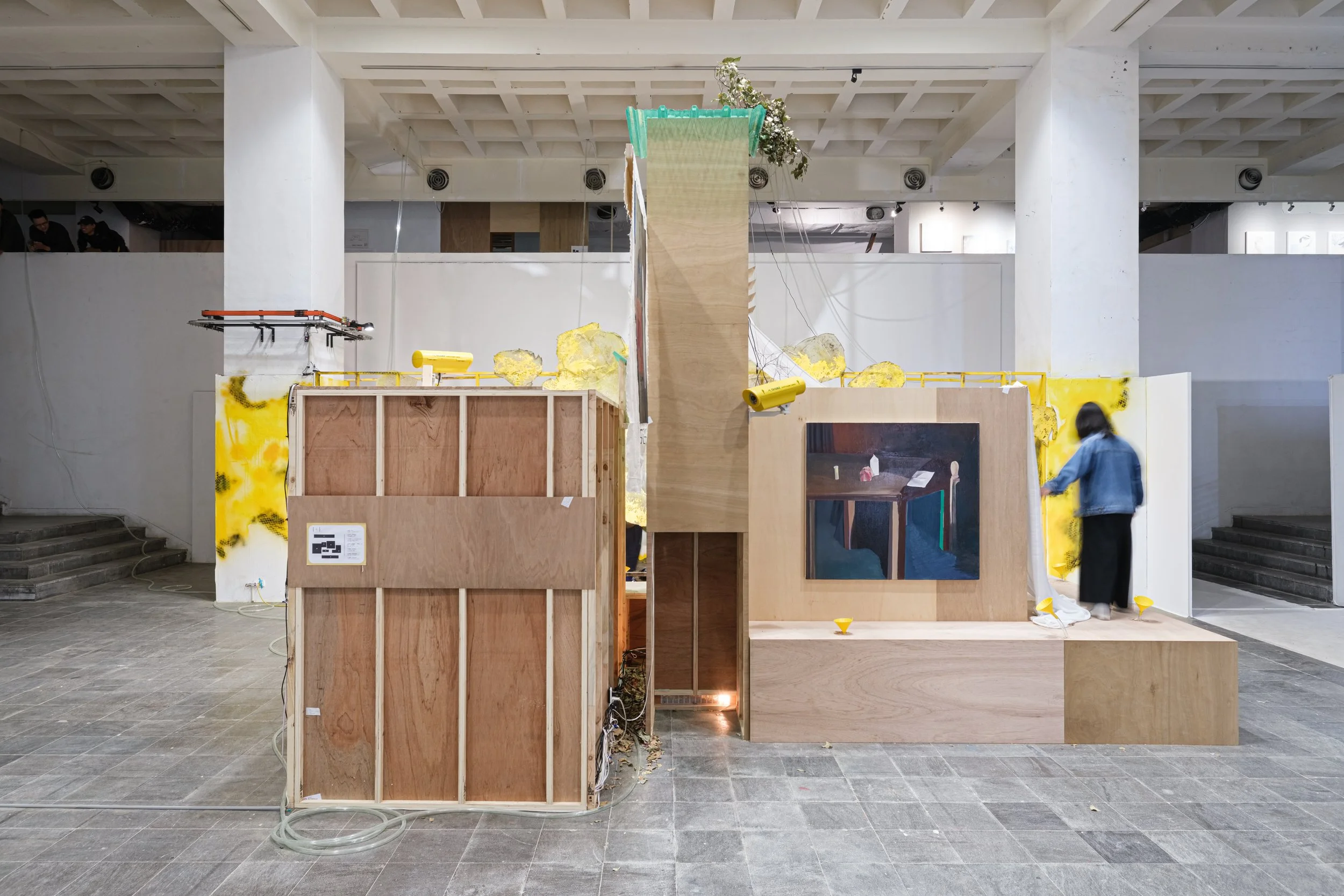
The preliminary concept of Pesdestal is to transform the spaces, exhibition walls, pedestals, and building materials that typically support an artist's work into "the artwork" itself. Through this work, I aim to elevate these often-unseen materials and the laborers who work with them to the same level of contemplation as the art piece.
Because my job is exhibition carpentry and installation, I often find myself in two roles: artist and carpenter/installer. These dual identities led me to contemplate the differences between them and how I could translate my experiences into a piece of art.
The 2023 graduation exhibition was a collaborative group project. At the time, I wanted to create a work that spoke to my identity as an art laborer, so I offered to fulfill the carpentry needs for the other artists' exhibitions. I discussed the necessary woodwork with the artists, then I produced and completed the structures.
In the end, my work became symbiotic with the other artists' pieces. From a distance, the piece looked like a large-scale sculpture that viewers could walk into to see the other artists' works inside. In this sense, the work physically asserts itself in the space, echoing the famous quip by the artist Barnett Newman (1905-1970):
("Sculpture is what you back into when you're looking at a painting.")
In an exhibition space, all finished wooden structures typically require puttying and painting to ensure the displayed works on the wall stand out or to align with the artist's concept. However, my intentional choice not to paint the woodwork served to highlight the texture of the pedestal and to intervene with the other artists' works. Yet, rather than debating which is the "real" artwork, the unpainted finish makes the entire structure look more like a unified piece.
Viewers can walk to the back-right corner of the work where they can see that I hid unused materials, trash, and design blueprints inside the wooden structure. This arrangement hints at the traces of the production process of the Pesdestal.
In the creation process of this exhibition, the relationship between the artist and the behind-the-scenes art laborer—"me"—resembled the complementary partnership between an architect and a construction worker in a city. If the entire exhibition is likened to a living organism, the art laborer acts like the "cells" within the body.
Generally, the construction of exhibition walls adheres to the demands and designs proposed by the artist. However, in this exhibition, after gathering the artists' input, I chose not to completely follow the methods they desired to highlight their works—for example, by not spackling and painting the surfaces, and by playing sounds of my construction process. This decision, to a certain extent, interfered with the artists' established concepts, making me seem like a critic within this system: both dependent on the exhibition system and deviating from the host's complete control.
《木作》的初步概念是將平時承載藝術家作品的空間、展牆、展台和建材,成為「藝術作品」。透過這件作品將這些不被看見的材料和勞動者,提升到跟藝術作品同個層次來觀看。因為工作是木工佈展,所以我經常會有兩種身分,藝術家和木工佈展人員。因為這兩個身分使我開始思考差異性及如何將我的經驗轉換成作品。
2023年的級展是透過團隊創作的形式進行,當時我想透過我作為一個藝術勞工的身分來做作品說所以我向其他藝術家提供他們展覽木作的需求。我跟藝術家們一起討論他們需要的木作後,由我來製作完成,最後我的作品已將藝術家的作品共生在一起。遠處看起來像是一件大型的雕塑作品,觀眾可以走進雕塑本身觀看其他藝術家的作品。在展覽空間裡所有的木作結構製作完成後都需要批土刷漆,為了讓掛在牆上的作品跟突出或是跟符合藝術家作品的概念,而我並沒有將木作上漆的目的是為了凸顯木作的質感和干擾其他藝術家的作品。但是與其說是與其他藝術家的作品斟酌誰才是作品,不如說透過不上漆讓整體可以跟加的像一件作品。觀眾可以走到作品右後方的角落,可以看見我在木作內部藏了一些未使用的材料,垃圾和設計圖。透過這個安排來暗示木作在製作過程的痕跡。
在這展覽的製作過程中,藝術家與幕後藝術勞工「我」之間的關係,就如同城市中的建築設計師與建築工人般,形成一種互補的合作狀態。若將整個展覽比喻為一個生命體,藝術勞工便如同身體內部的「細胞」。一般而言,展牆的製作會依循藝術家所提出的需求與造型製作,但在這次的展覽中,我在收集藝術家的意見後,選擇不完全照著藝術家想要凸顯作品的方式製作如;補批土刷起和播放我在製作作品過程的造音。這樣的決定在某種程度上對藝術家的既定構想造成了干擾,彷彿成為在這套系統裡面的批判者:既依附於展覽系統,又偏離宿主的完全控制。